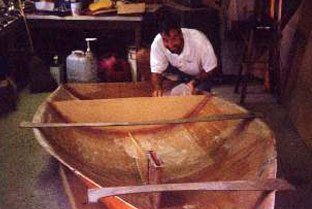
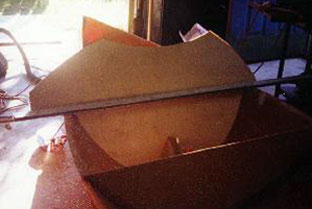
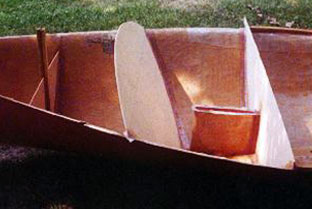
Classic Moth Boats are a class of small fast singlehanded racing sailboats that originated in the US in 1929 by Joel Van Sant in Elizabeth City, NC. The Classic Moth is a monohull development class using a modified version of the International Moth rule in effect pre 1969. With an eleven foot over-all length, a maximum beam of 60 inches, a minimum hull weight of 75 pounds, 72 Sq Ft sail area, and very few other restrictions a Classic Moth can be a skiff, pram, scow, skinny tube, dinghy, or any combination thereof. The Classic Moth Boat is an ideal class for amateur designers builders and tinkerers, and can be easily built from inexpensive materials.
If you wake up in the middle of the night with a novel idea for hull shape, you can leap out of bed, race down to your garage, build it and then find out at the next regatta if your idea is hot or not. Freedom of design sets Moths apart from the clorox bottle (one-design) crowd. Instead of the one design controlling who sails successfully, we design and build Classic Moths that fit our size, ability, taste, skills, artistic expression, and pocketbook.
To broaden the appeal to race all types of Classic Moths, we have created three divisons within the class. At major regattas, all Classic Moths race together but are scored in three different divisions; a Gen 2 division for full on narrow waterline, low wetted surface designs, a Gen 1 division for more stable, higher wetted surface designs, and a Vintage division for restored Moths built before 1950.
Presently, Classic Mothboats race in many locations up and down the east coast of the United States. Regattas are currently held in Brigantine, NJ; Portsmouth, VA; Chestertown, MD; Cooper River, PA; Augusta, GA; Norfolk, VA; Elizabeth City, NC; Charleston, SC., and St. Petersburg, FL. Please refer to the regatta schedule on this site for dates and contact information.
Latest News